for Pop
So close to the end now, his words have abandoned him,
Ballast shed to travel light.
He traces the air, mimes his mute instructions to beings not in the room.

I wonder if his peregrine mind might find its way here, back to the easel by the fire, forty years hence.
On the canvas, perhaps it could paint himself a doorway to walk through, back another forty still,
Into that landscape of two rivers,

Shuffle drowsily out of this autumn twilight
Into the embrace of Red’s Dos Rios Mercantile Hotel,
Climb the stairs to his beloved childhood sleeping porch on the roof—
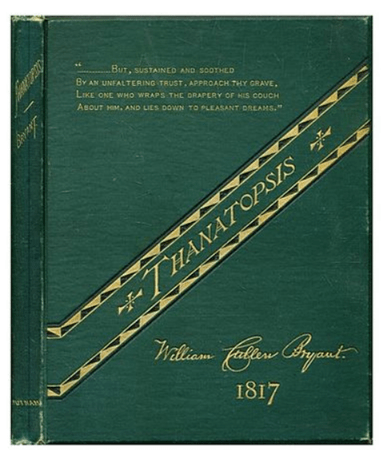
—(“Like one,” intones that old poet of nature and mortality, William Cullen Bryant,
Dictating the “Thanatopsis” from deep in Skip’s one-room schoolhouse days,
“Like one who wraps the drapery of his couch
About him, and lies down to pleasant dreams”. . .)
—His couch on the sleeping porch,
Gentling him into the great slumber
Under his favorite comforter
Of the dazzling, eternal Mendocino stars.

Copyright ©2023 by Lee Krähenbühl. All rights reserved. Reprinted by permission. Permissions: LeeKrahenbuhl@aol.com. The favor of attribution is requested.
Composed: Fairland Heights, Maryland, October 21, 2023
Notes: A elegy for my father in hospice care. “Thanatopsis” (1817) (“meditation on death”) is the most famous work by American poet William Cullen Bryant (1794-1878); while I was doing research on Joseph Smith Lee, Sr., my father’s great grandfather, Bryant emerged as Lee’s favorite poet. “Thanatopsis” was the kind of poem my father would have recited by rote in his one-room schoolhouse, just up the road from his home at my grandfather’s place of business, Red’s Dos Rios Mercantile Hotel & Cottages.
The landscape, showing the convergence of two forks of the Eel River that gave Dos Rios its name, is by a painter named Margo who stayed with her husband at Red’s around the summers of 1942 and ’43. I think she in general, and this painting in particular, might be the one who inspired my father to take up the art himself. Why he decided to paint in our shag-carpeted living room in the picture above (ca. mid-1980s), I have no earthly idea.
 Lee Krähenbühl, PhD